
Overview
Crete must have been the most well guarded island for a while. It had Talos, a huge bronze robot circling its shores 3 times a day. Talos threw stones at and drowned any ships it spotted daring to come ashore. It was awesome and lethal, and fuelled by ichor, the blood of the gods. Medea, a sorceress travelling with Jason and the Argonauts, divined that Talos thought himself human, and that he harboured a desire to be immortal even though he already was. She convinced Talos that she could make him immortal, if only he would allow a bolt at his ankle to be removed. Talos agrees and the ichor rushes out of this single weakness in his design. Talos collapses, a tear upon his bronze face.
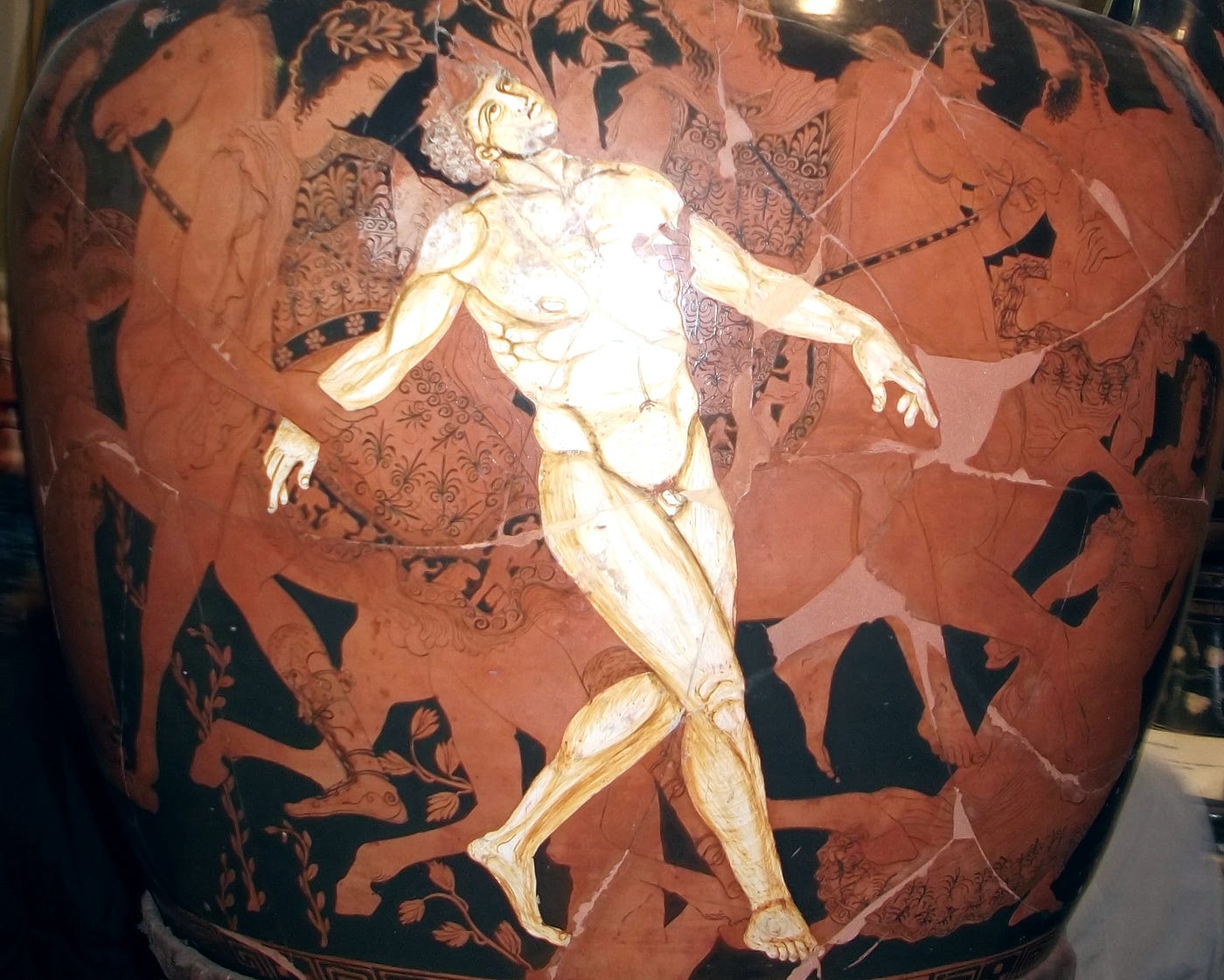
Talos dies, a tear upon his face.
That’s a story that was first recorded in 700 BCE. About a robot. About a robot that thought itself human. But, this isn’t the only Greek myth with robots in it. During his quest for the golden fleece, Jason encounters robot bulls that breathed fire, and robots that climb out of the earth ready to fight. In the story of Cephalus, Laelaps, a bronze robot hound who always caught his quarry.
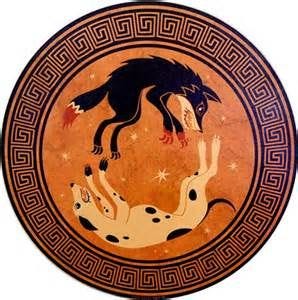
Laelaps, a hound who always gets his quarry, is set upon the Teumessian Fox who was destined to never be caught. Just when the hound is about to outrun the fox, Zeus turns them both to stone. Their eternal chase is commemorated in the Canis Major and Canis Minor constellations.
Hephaestus, the metalworker-inventor son of Zeus and Hera, is said to have had automated bellows in his forge, golden maidens to help him with his work, and automated carts that took ambrosia and nectar to the gods and returned when they were empty. He was also the one that built automatic doors to the heavens. Hephaestus’ most famous work though, was Pandora, a robot that was tasked with unleashing evils upon mankind.
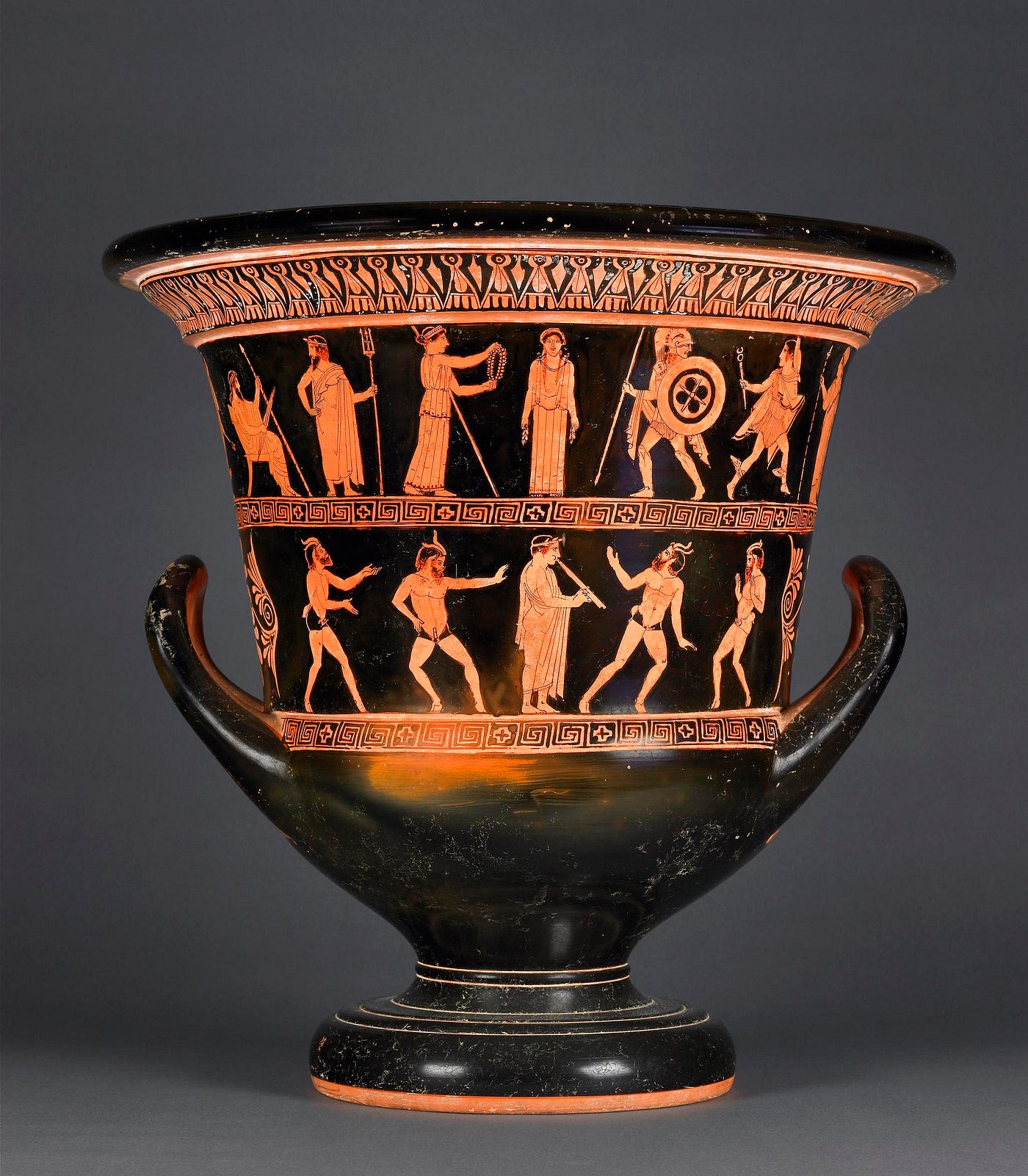
The creation of Pandora. Notice how Pandora is staring straight at the viewer while everybody else is depicted in profile.
The robots of yore aren’t just centred in Greece even. Flying peacocks with mercury flowing through them, the Pushpaka Vimana, are mentioned in the Ramayana. The Talmud talks about Golems, clay creatures brought to life with sacred incantations and charged with the protection of Jewish settlements. And, Chinese texts mention an artificer, Yan Shi, presenting King Mu of the Zhou dynasty, a life-sized, human-like automaton that could sing and dance. Interest in robots spans cultures.
Why the obsession?
We are used to creating life — we give birth, and we see other animals giving birth. So, what unfulfilled need drives us to build robots when we already possess the ability to create life? Is it that we get to determine the outcome? Is it that we get obedience? Is it that we get to surpass natural limitationsand make them stronger or faster than any other living creature? Is it that we get to violate the boundaries between the living and the lifeless?
It cannot be controlling of the outcome or obedience that drives us. We were thrilled when AlphaGo surprised us with a new way of playing the game. And, while there might be some perverse pleasure in animating metal and silicon, it does seem likely that surpassing natural limitations might be a likely impulse. But, I wonder if it isn’t something simpler at the heart of it all: that we are driven to solve puzzles, and trying to animate metal is puzzle enough.
In the public sphere
The stories of robots pose hard questions. It is a teary-eyed Talos that is shown falling on a vase. (Apparently, the painter became known as the Talos Painter owing to this.) In his poem The Faerie Queene, which was published in 1596 and meant to ennoble knights, Edmund Spenser references Talos and asks the question, “Can killer robots dispense justice?”
In 1818, Mary Shelly’s Frankenstein revived the idea of a manmade and sapient creature. Readers are justified to wonder whether the happiness of creatures we create are our responsibility.
Potryals of robots vary wildly. Karel Čapek’s 1920 play “Rossumovi Univerzální Roboti”, which coined the word robot, and the movies Metropolis and Terminator portray robots as malevolent creatures that want to destroy humanity. However, the Jetsons, Star Wars, and Wall-e portray a much more benevolent relationship.
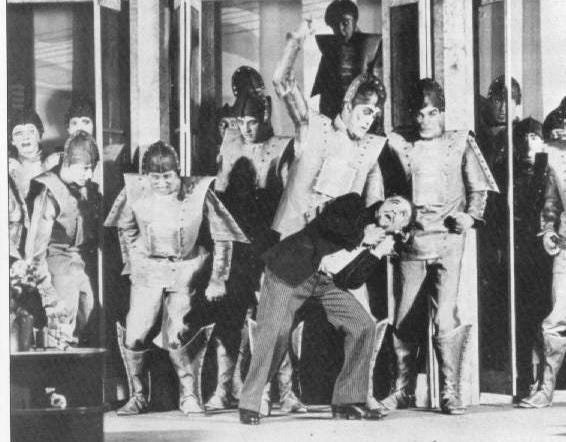
The robots storming the factory in the 1920 play, Rossumovi Univerzální Roboti.
Through all these narratives though, one thing stands out: there is a sense of inevitability about their existence. And, while previously these were just fantastical, recent advances in computing power and AI finally makes robots possible.
The uses of robots
Robots might be touted as being useful for doing the work we don’t want to do. Indeed, the Czech word robota means “forced labour”. The mundane, the repetitive, the mind-numbing work. But, honestly, I’ve been a technologist too long to not recognize when something’s just been made out of curiosity and a use tacked on later. Robots, really, are a prime example of that.
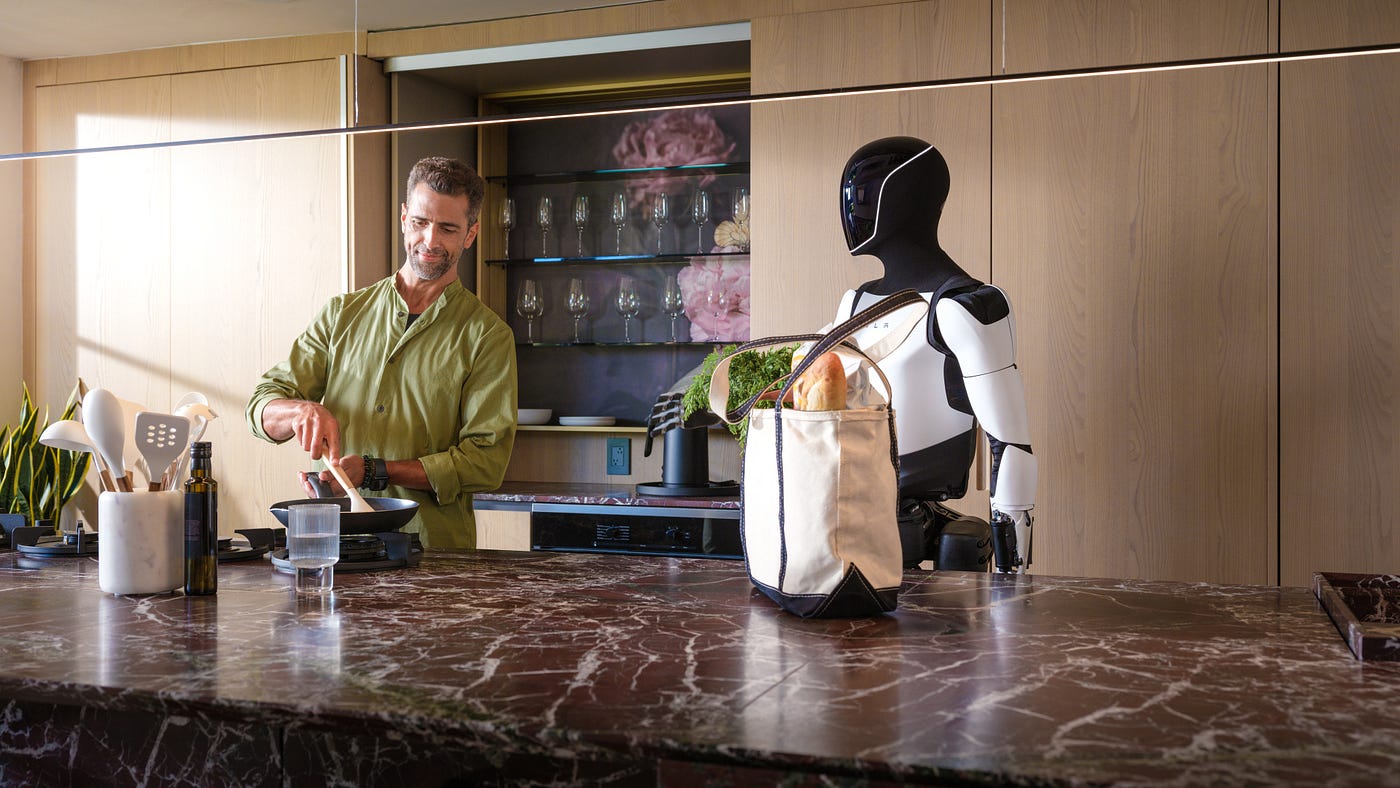
Putting away groceries is probably not the killer app.
While trying to do some background work on this article, Claude.ai asked me what I thought the uses of robots were. And, really, I can’t put a finger on it. Help with house chores and running errands? That seems a very particular view of the world. In many countries, you’d just hire someone to do it. There’s no need to go out and buy a less capable, much more expensive piece of equipment.
The uses of robots have been tacked on post hoc.
Don’t get me wrong. I’m not saying that robots will not be useful, just that we haven’t found the “killer app” yet. It will need to be let out into the wild, and stewed in society for a few years before we figure out what that might be. Computers didn’t explode until VisiCalc came along. Touchscreens are what made cellphones ubiquitous. And, it wasn’t until Large Language Models (LLMs) came along that AI came to the fore. Robots too, will arc the same way. And then it’ll spread. Someone will paste the slogan “A ROBOT IN EVERY HOME” on a beige company wall and then we’ll be off to the races.
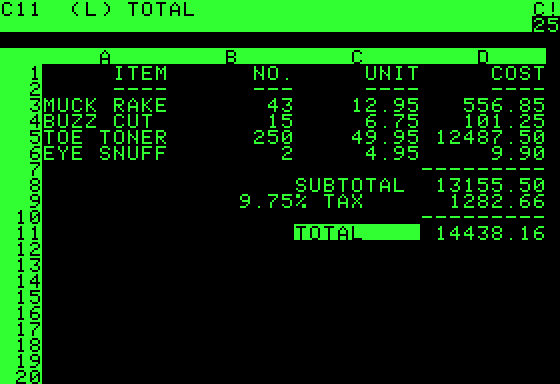
VisiCalc made computers useful.
If we are placing bets though, wouldn’t companionship be a fantastic use of robots? Someone that can teach us how to paint, who could correct our yoga postures, go jogging with, or just talk to us about anything at all, be wonderful? We anthropomorphize unrelentingly, so why wouldn’t we connect with something that has form and looks like us? Would it be so strange for humans and robots to be friends?
The forces making it happen
While the thought of a robot seemed fantastical before, the advancements in computing and in AI is making robots possible. The ability to evolve designs in virtual environments will allow companies to produce them far faster and more economically than would have been possible just a few years ago. We are probably going to see a multitude of robots soon.
However, we are on the precipice of a gold rush. High fidelity real-world data is yet to be gathered fully. NVIDIA has made a business out of the real-world models that they have been able to put together, but a robot swarm can propel any robotics company much further. This data will compound — having better data will lead to better robots. There is probably a first-mover advantage here. (Given their value, I wonder why the smart glasses companies aren’t handing their glasses out like candy already!) It is this that I feel will bring robots into our world.
In the end
It seems that it was Prometheus’ great love for his creation that prompted him to steal fire from the gods to give to us. For his temerity, he was chained to a rock and had his liver — the seat of passion — eaten out everyday. Creation myths notwithstanding, tell me, how would we prove that we aren’t robots ourselves? How hard is it then for us to accept robots, especially as they populate our world more and more, and the line between them and us thins? I suppose, like Medea, all that’ll be left for us to do is to see the humanity in Talos.